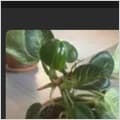
Philodendron 'Birkin'
Philodendron 'Birkin' (horticultural hybrid/cultivar)
Toxic to pets☀ Bright indirectMedium care
Check in 4 days· Jul 17
Water when the top 1–2 in. of soil are dry.
Every 7 daysLast watered: 2026-07-10
This is a soil-check date, not an automatic watering date.
Overview
- Summary, origin & habitat
- A compact, self-heading tropical philodendron grown for white pinstriped foliage. Its exact hybrid origin is uncertain; it is often described as a mutation or hybrid related to Congo-type philodendrons. It has no natural wild range as a cultivar, while the genus is native to tropical American forest understories.
- Interesting facts
- Variegation can change from leaf to leaf. Very low light may produce greener leaves, while excessive sun can scorch the pale sections.
- Name story
- Philodendron comes from Greek words meaning “tree-loving,” referring to the climbing habit of many species. “Birkin” is a cultivar name; its precise naming origin is not reliably documented.
- History & legends
- A relatively modern horticultural cultivar. Its exact origin is not fully documented, and it does not have an established traditional legend.
Care
- Light
- Bright, filtered or indirect light. Avoid strong midday sun; insufficient light reduces the white pinstriping.
- Temperature
- 65–85°F (18–29°C); avoid cold drafts and temperatures below about 60°F.
- Watering
- Water when the top 1–2 in. of soil are dry.
- Fertilizing
- Spring–summer: balanced houseplant fertilizer monthly at ½ strength. Reduce or stop in fall–winter.
- Toughness
- Medium
- Difficulty
- Medium
- Maintenance
- Medium
- Maintenance notes
- Needs consistent indirect light, drainage and moderate humidity. Rotate for even growth and watch for mites/mealybugs.
Growth & flowers
- Mature height
- Usually 2–3 ft indoors
- Mature spread
- Usually 2–3 ft
- Leaf colors
- Dark green with cream-to-white pinstripes; new leaves may emerge nearly white.
- Leaf type / form
- Simple, oval to broadly elliptic, glossy and somewhat leathery; compact self-heading form.
- Best planting / repotting time
- Indoor potting can be done year-round; repot or propagate in spring to early summer.
- Bloom time
- Rare indoors; no dependable seasonal bloom.
- Flower color
- Greenish-white to cream spathe and spadix; ornamental value is mainly the foliage.
Safety
- Toxic if eaten?
- Yes
- Who is affected
- People, cats and dogs
- Possible effects
- Calcium oxalate crystals can cause immediate mouth pain, swelling, drooling, vomiting and difficulty swallowing.
A safety guide, not medical or veterinary advice. “Non-toxic” does not mean edible — even non-toxic plants can cause stomach upset. For a person, contact Poison Control; for a pet, a veterinarian.
Tips
- Pruning
- Remove yellow or damaged leaves at the base. Cut stretched stems just above a node in spring; avoid removing too much foliage at once.
- Propagation
- Stem cuttings with at least one node; division is possible when the plant forms multiple growth points.
- Repotting
- Repot every 1–2 years or when roots circle the pot. Move up only 1–2 in. in pot diameter and use an airy aroid mix.
Ecology
- Adaptation strategy
- Broad leaves capture filtered understory light, while thick petioles and aerial-rooting ancestry help support tropical growth. The white tissue has less chlorophyll, so the cultivar needs brighter indirect light than an all-green philodendron.
- Ecological application
- Best used as a compact interiorscape or tabletop specimen. As a human-made cultivar it has no distinct wild ecological role; avoid outdoor release in tropical climates.