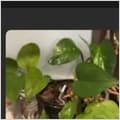
Golden Pothos
Epipremnum aureum
Toxic to pets☀ Low–bright indirectEasy care
Check in 4 days· Jul 17
Water when the top 1 in. is dry.
Every 7 daysLast watered: 2026-07-10
This is a soil-check date, not an automatic watering date.
Overview
- Summary, origin & habitat
- A vigorous evergreen climbing vine native to the Society Islands. It attaches to trees with aerial roots and is one of the most common hanging and climbing houseplants.
- Interesting facts
- A hanging pothos usually keeps small juvenile leaves; climbing with strong light can produce dramatically larger leaves.
- Name story
- Epipremnum roughly refers to growth “upon a trunk,” and aureum means golden. “Pothos” is an older trade name retained from past classification.
- History & legends
- A classic pass-along houseplant prized for surviving neglect. The common name “devil’s ivy” reflects its persistence and ability to remain green in dim conditions.
Care
- Light
- Medium to bright indirect light; tolerates low light but loses yellow variegation.
- Temperature
- 65–85°F (18–29°C); protect from temperatures below about 55°F.
- Watering
- Water when the top 1 in. is dry.
- Fertilizing
- Monthly at ½ strength in spring–summer; reduce in fall–winter.
- Toughness
- High
- Difficulty
- Easy
- Maintenance
- Low
- Maintenance notes
- Very forgiving. Prune long bare vines and provide brighter indirect light for compact, variegated growth.
Growth & flowers
- Mature height
- Vines commonly 6–10+ ft indoors
- Mature spread
- About 1–3 ft across the pot; trailing length depends on pruning
- Leaf colors
- Green with yellow-gold marbling or streaking.
- Leaf type / form
- Glossy, simple, heart-shaped juvenile leaves; mature climbing leaves can become much larger and divided.
- Best planting / repotting time
- Year-round indoors; best repotted and propagated in spring to early summer.
- Bloom time
- Extremely rare indoors.
- Flower color
- Greenish-white spathe and spadix.
Safety
- Toxic if eaten?
- Yes
- Who is affected
- People, cats and dogs
- Possible effects
- Calcium oxalate may cause oral burning, swelling, drooling, vomiting and difficulty swallowing.
A safety guide, not medical or veterinary advice. “Non-toxic” does not mean edible — even non-toxic plants can cause stomach upset. For a person, contact Poison Control; for a pet, a veterinarian.
Tips
- Pruning
- Cut vines just above a node and pinch tips to encourage branching. Remove bare sections and replant rooted cuttings into the same pot.
- Propagation
- Very easy from one- or two-node stem cuttings in water or potting mix; also by layering.
- Repotting
- Repot every 1–2 years when root-bound. Use an airy mix and add a support if larger mature leaves are desired.
Ecology
- Adaptation strategy
- Shade tolerance allows juvenile vines to spread under forest cover. Aerial roots permit climbing; access to light and support triggers much larger mature leaves.
- Ecological application
- Useful in hanging baskets, green walls and tropical groundcover. It is invasive in several warm regions, so never discard live cuttings outdoors.