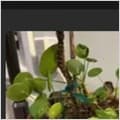
Chinese money plant
Pilea peperomioides
No known toxicity☀ Bright indirectEasy care
Check in 4 days· Jul 17
Water when the top 1–2 in. are dry.
Every 7 daysLast watered: 2026-07-10
This is a soil-check date, not an automatic watering date.
Overview
- Summary, origin & habitat
- A compact evergreen perennial native to cool, shady mountain areas of Yunnan, China. Its round leaves and abundant offsets have made it a popular pet-safe pass-along plant.
- Interesting facts
- Its popularity spread for decades among home growers before it became widely available commercially, leading to the name “friendship plant.”
- Name story
- Peperomioides means “resembling Peperomia.” The coin, pancake, UFO and money-plant names all refer to the round leaves.
- History & legends
- Collected by Scottish botanist George Forrest in the early 1900s. Norwegian missionary Agnar Espegren later carried a plant to Scandinavia in the 1940s, where it spread widely through shared cuttings.
Care
- Light
- Bright indirect light; rotate the pot weekly for symmetrical growth. Avoid strong afternoon sun.
- Temperature
- 60–75°F (16–24°C); avoid heat vents and cold drafts.
- Watering
- Water when the top 1–2 in. are dry.
- Fertilizing
- Monthly at ½ strength from spring through early fall; little or none in winter.
- Toughness
- Medium
- Difficulty
- Easy
- Maintenance
- Low
- Maintenance notes
- Easy if given even light and drainage. Rotate regularly and remove excess pups if the pot becomes crowded.
Growth & flowers
- Mature height
- 8–12 in.
- Mature spread
- 8–12 in.
- Leaf colors
- Glossy dark green.
- Leaf type / form
- Round, simple, fleshy peltate leaves with the petiole attached near the center, held on long stalks.
- Best planting / repotting time
- Spring to early summer is best for potting pups, propagation and repotting.
- Bloom time
- Spring or summer; rare indoors.
- Flower color
- Small white to pinkish spike-like flowers.
Safety
- Toxic if eaten?
- No known toxicity
- Who is affected
- Not classified as toxic to cats or dogs
- Possible effects
- Generally considered pet-safe. It is still not intended to be eaten.
A safety guide, not medical or veterinary advice. “Non-toxic” does not mean edible — even non-toxic plants can cause stomach upset. For a person, contact Poison Control; for a pet, a veterinarian.
Tips
- Pruning
- Remove old lower leaves at the stem. Pinch the main tip only if branching is desired; rotate rather than pruning to correct leaning.
- Propagation
- Separate offsets or pups once they have roots; stem cuttings also work.
- Repotting
- Repot every 1–2 years in spring. A slightly snug pot helps avoid excess wet soil.
Ecology
- Adaptation strategy
- Broad peltate leaves efficiently capture filtered mountain light, while frequent offsets allow clonal spread in suitable pockets of soil.
- Ecological application
- A compact pet-safe interiorscape choice for desks and shelves. It is mainly ornamental outside its native range.